About Me

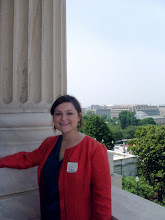
My photo
Hello, Ciao,안녕하세요, Hallo, Hola, Selamat tengahari! My name is Rachael and I am a travel enthusiast. Ever since I can remember, my parents have taken my brother, sister and I on good ol' American road trips. It's safe to say that was where my interest in new places, people and experiences was ignited. As my parents always encouraged my siblings and I to explore and ask questions, I developed a sincere curiosity for new adventures. In addition to seeing much of the United States with my favorite travel companions (my family), I had the opportunity to spend a semester in Rome, Italy, as well as a semester in Seoul, South Korea during my college career. Now, I am honored to be taking part in a Fulbright ETA Scholarship to Malaysia for a year! My family's favorite motto is "Life is all about the journey, not the destination." I invite you to join along in my journey of cultural exchange and mutual understanding in Malaysia! After all, the more, the merrier.

Monday, January 14, 2013

Ramadan & Hari Raya Puasa


Female students and I enjoying our
beautiful Hari Raya clothes!
Hari Raya Puasa is an important occasion that is celebrated by Muslims all over the world. The festival marks the end of one month of fasting, known as Ramadan.

Ramadan is a one-month fasting periods in which Muslims fast from sun-up to sun-down. This often can be up to a period of 12 hours. Apart from eating and drinking, Muslims are also forbidden from smoking and having intimate relations. In addition, Muslims are expected to avoid lying, breaking promises and cheating during this time. Ultimately, Ramadan is a time of self-control in which Muslims must concentrate on submitting to their holy one, Allah.


My local Bazaar Ramadan in Besut!
During Ramadan, Bazaar Ramadans are seen throughout Islamic communities. In general, a Bazaar Ramadan is a huge open market with many varieties of food, snacks and gifts. Muslims come to these special markets to purchase foods for the large meals they enjoy after the sunset. (Usually after 7:15pm) During the month, Muslims also purchase and collect food for their large Hari Raya celebrations. (Similar to how my family starts purchasing gifts as well as items for our big Christmas dinner weeks before the dinner
itself). The Bazaar Ramadans were definitely an experience. As I was wandered through the long stretches of my local Bazaar Ramadan in Besut, I was often captivated by the many colorful foods, exotic smells and ambitious shoppers who meandered from stall to stall.


Form 4 girls and I enjoying each other's company at
the Hari Raya celebration.
At the conclusion of Ramadan, Muslims break the fast (puasa) with Hari Raya Puasa. To prepare for Hari Raya Puasa, the women start to sew new curtains as well as new baju karungs and baju melayus. In my teachers’ room at school, there were stacks of beautiful fabrics and complementary pins that were ideal for creating a new garment. On the morning of Hari Raya Puasa, Muslims wear their new clothes and go to the mosque to pray. First, they offer thanks to Allah. Then, they ask for forgiveness from their elders.

Asking forgiveness from elders is essential for the young ones. In fact, I received several “Selamat Hari Raya” (Happy Hari Raya) cards from my students that asked for my forgiveness for their mistakes on homework and behavior in class. The cards I did receive were from my most well behaved students too, ironically. For Hari Raya Puasa, homes are filled with wide varieties of spicy dishes. The Muslim children also receive money.

A Form 2 student offering some of
her homemade cupcakes for Hari Raya!
During Ramadan, there was still school and regular scheduled classes. It was no surprise to me that my students were very lethargic during the beginning of their fasting month. However, it amazed me how well they functioned by the end of Ramadan. Fasting and not drinking any sort of liquid, including water, in a tropical climate is no easy task. I attempted fasting for the first two days of Ramadan, just to see what my students would be experiencing. On day three, I chose to simply not eat or drink while at school during Ramadan, but after school I would be found gorging on food and drinking my weight in water in our home kitchen.

After my school’s week break for Hari Raya, there was a feast to be found in different areas of the school everyday. The different offices at the school hosted potlucks and teachers would go there to enjoy delicious foods on their breaks. Moreover, my school even hosted a school wide Hari Raya celebration. I was instructed to ‘look beautiful’ and wear my best baju karung. When I arrived at school that day, I saw that everyone definitely looked their best. The students did not even have to wear their uniforms! It was a day filled with music, beautiful clothing and food… lots of food!


The school wide Hari Raya celebration!
There was a large variety of foods.

The school wide Hari Raya celebration! About 900 plus
people gathered in the gymnasium and enjoyed a big meal!

My Form 4 students posing for a thumbs up!
A fellow teacher and I!
Some fun Form 4 students sporting their best attire!
A stand-out student of mine, Syatirah, and I! She was one
of the most outgoing sixteen year olds I have ever met!

My fellow teacher and I at the Hari Raya celebration!
KHAS students and I having fun at the celebration!
Teachers and I enjoying food at the school's
Hari Raya celebration. Everyone wore their best garments!
I was allowed to sit in the men's circle for a photo opportunity.

Students performed songs and poems, in Malay, on stage!
Form 4 students and I hiding in the shade
with smiles on our faces!

Ikan bakar (roasted chicken) at the local Bazaar Ramadan!

Roti tempayan (flat, flaky bread) at the local bazaar!

Pandan cake. It was a moist, soft cake special for Hari Raya.
The green color comes from the infamous Pandan leaf in Malaysia.

The melon stall, home to very fresh watermelon! Sedap (delicious!)

My fellow American friends and I enjoying food from the Bazaar Ramadan in Besut!
We became somewhat comfortable eating on my yoga mat and our home's huge carpet!
They came to Besut just to see our bazaar, as it was known as the best one in northern Terengganu!

Saturday, January 12, 2013

Getting Where You Want To Go


The SMK PNZ Choral Speaking team performing their prose entitled
"Getting Where You Want To Go."
Choral speaking consists of a group of 30 to 35 students speaking in unison. In essence, it is a speaking ensemble in which a group often uses various voice combinations and contrasts to bring out the meaning or tone of a passage of poetry or prose. It is a well-known art and activity in Malaysia, and students striving to learn and master English often join their school's choral speaking team. It is highly competitive, and it takes a great deal of dedication, patience and practice.

An English teacher approached me in late February and said, “Cikgu Rachael, so...you coach choral speaking this year?” I looked at him quite confused, which was a common occurrence in the early days of teaching at PNZ.

“Um… what is that?” I asked. He tried to explain in English, but, I must admit, that I was quite uncertain about what it entailed. But, never mind, I responded and said, “Of course I will.”

The Form 5 SMK PNZ performers!
He went onto explain that I needed to compose lyrics for the group and that practice would begin in March. Thus, it was no surprise that I spent that night searching Google like a mad woman trying to figure out what the art of choral speaking entailed and what lyrics needed to consist of. 

Within a few days, I composed four pages of lyrics, successfully titled them and presented them back to the teacher. Several weeks later, we hosted try-outs, chose students and began practicing. Although I was the coach, I was definitely learning as we went along. Choral speaking was immensely new and different to me, so as the students learned new words and  sayings from the lyrics, I was learning the art in itself.

Form 3 performers and I!
My roommate, Nina, and I after the competition.
Nina's school competed as well!
In late April, the competition was held and our school was chosen to perform first! The students were extremely nervous. However, after a group pep talk, they took the stage with their heads held high. As they performed on stage in unison, I beamed. I was so immensely proud of them. It was not long before at our first practice that they had struggled with pronunciation and tone. During the competition, they pronounced the words fluently and spoke with incredible inclination and voice.

The lyrics of the prose I composed were entitled “Getting Where You Want to Go.” All in all, it was about believing in oneself and staying true to one’s dreams. I wrote it as a way to set a positive tone for the remainder of the year! In fact, several of the lines became quite infamous around the school and students used them as inspirational quotes in their classrooms!

I am so proud of you, SMK PNZ Choral Speaking! 

Practice. Practice. Practice.

Dress rehearsal. The girl who is standing on the chair is known as the conductor.

Track and Field - Malaysia Style


Although I started several new projects and clubs at SMK Permaisuri Nur Zahirah, I also became involved with previously existing groups at my school. In March, I helped coach the school track team for their district meet, and in April, I coached the school’s choral speaking group.

In America, track teams train for months on end and compete in multiple meets and tournaments over the course of several months. In contrast, in Malaysia, students train for approximately two months for one, four-day district meet. Then, the track season is over.

When the male track coaches discovered that I was athletic and liked to run, they reached out to me to help coach the team. I was absolutely thrilled. At this point, I had only been at the school for about seven weeks and the students were still intimidated by me. However, at the track meet I simply hung out with the athletes, spoke to them in English and Malay and encouraged them.

Team huddle after the meet! Of
course, it was in Malay, but I
got the gist of it!

Four days on a track, in the heat of the Malaysian sun was tough. In fact, I am pretty sure I sweated out my body weight. However, it was so interesting to compare and contrast track and field in Malaysia versus America. For instance, Malaysia’s high school track teams do not have pole vaulting, but they do have speed walking. I was in awe as I witnessed over thirty students speed walk sixty laps around the track in the heat of the day. In addition, another aspect of Malaysian track and field that caught me by surprise was that many track athletes choose not to wear their shoes. They have them but simply choose to compete without them.

It was a fun few days of running in the sun. Although I finished the week with some rough sunburn and a particularly sweaty wardrobe, it was one heck of a memory. And, the team even presented me with a team polo during awards on the closing day of the meet!

Way to go SMK PNZ!

The SMK PNZ Track and Field team!
We walked away with quite a few medals, and I got an official
team polo!


The girls' relay team!


The athletes hanging out after an event!
Team huddle on the track in the bright sunlight!

Hanging out under our SMK PNZ tent!

Banagrams, stickers and pictures... Oh my!


The daily Banagram group!
My Ultras Redside Chicago Fire
Soccer Team scarf and my old
Chicago Magic soccer jersey!
Litte things proved to be incredibly
useful with my students!
This past year I learned the importance of finding inspiration and wonder in the small things. The three greatest resources that I used with my students this year were Banagrams, stickers and pictures! These three items never failed when it came to entertaining and encouraging my students to speak English.

Practically everyday, I had a group of six Form 1 boys that would come to my desk and curiously look around. I always knew what they were looking for – Banagrams.

“Teacher, where Banagrams?” they would asked.
“Do you want to play?” I would respond.
“Yes!” they shouted in excitement.

Making dominoes with the letter
pieces!
For twenty to forty minutes, the boys would crowd around my small desk and make sentences and words with the little blocks. Little did they know that while they were constructing the pieces into words and sentences, they were learning English. Of course, after several weeks of making words with the pieces, they got a better idea – Banagram dominoes. So, after creating some words, I would let them form a domino chain around my desk. I am not sure if the other teachers appreciated that, but for me, it allowed the students to open up to me. As we played games at my desk, they would magically start talking without hesitation.

A finished Banagram domino sequence!
In addition to Banagrams, stickers and pictures always interested my students. In fact, more than a few times, I received generous care packages from home that contained stickers. I would walk around the school and hand the stickers out to students who would say, “Hello!” to me or “Hi, Teacher!” Of course, word would get around. Before I knew it, students would be running all around the school trying to find me to say something in English and get a sticker. Sticker days were some of my most favorite days!

In class, pictures were incredible resources. Pictures really allowed my students to open up their eyes to my life back home. I would show them pictures of my family and friends, and I even brought in a picture of me with my high school soccer team!

“Teacher, you play football?” many of the students would ask.
“Yes, but in America we call it soccer.” I would explain.
“Oh…” they would comment hesitantly.

My students and I with stickers!
Part of my sticker collection -
thank you to my family and friends!
Whether it was pictures of America, my home, my family or my friends, the pictures allowed them to get to know me. To add, the pictures would bring about many questions, and there was no way for the students to gain answers to their questions without asking me in English!

Through my experience teaching, I have learned the importance of simplicity and creativity when teaching English abroad. Banagrams, pictures and stickers were so simple, yet so useful! 


My Form 4 students with some of my special things: high school soccer photo, Chicago Fire scarf, my Singapore 16K running bib and medal.

Friday, January 4, 2013

The Biggest Light I've Ever Seen


My family and I with the KHAS students and teachers during their visit to SMK PNZ!
Back when I first arrived in Besut, Malaysia, I was given a tour of my school. As we walked through the exposed hallways, children waved, shouted and pointed. They were obviously shocked to see a foreigner walking through their hallways. All in all, I suppose it was quite different than I expected and in my head I started thinking, “I wonder how this is going to go…” No matter, I remained positive.

As we concluded our tour, we walked past three classrooms with bright, colorful bulletin boards that said, “KHAS.” The welcoming bulletin boards and cute decorations caught my attention. 

KHAS Standout 16- year old Students!
“Apa ini?” (“What is that?”)  I asked my mentor, Halilah.
“This is KHAS class,” she replied.
“Apa ini?” I asked again unsure of what KHAS meant.
“This is for special students. Students with disabilities,” she answered.

“Oh!” I said surprised that a school in my village would even have such a program. In certain parts of Asia, special education programs are still a new concept. In fact, in many Asian countries, they do not even exist.

Halilah went on to explain that only certain
One of my 17-year old students. His smile and
pure curiosity always put a smile on my face!
schools in Malaysia have special education
programs, and I was astounded to realize that my assigned school was one of these.

“Can we go in?” I asked Halilah. She seemed surprised, but led me in.

As we walked in, the students smiled and some waved. The KHAS teachers immediately came up and greeted me with warm embraces and smiles. Only one of the teachers, Jamaliah, in KHAS could speak some English, so she went on to explain their classes to me.

After a 45 minute tour and interacting with the teachers, I looked at the 15 plus students. Perhaps it was their curious demeanor or their kind eyes that captured my heart, but I immediately asked, “Can I work with your students? I could come once a week and do songs with actions or color. I could just help in your classes."

KHAS male students receiving an award for their
accomplishments during the school year.
Photo: Courtesy of SMK PNZ

Students doing a drama!

They looked at me, once again surprised. “But, Miss Rachael they know no English,” they explained.

“I’ll make it work,” I exclaimed.

From that moment on, I went to the KHAS class for forty-minutes, once a week to do songs with them. Although I did converse a bit in Malay with them to build a connection, we did the songs in English. We did the Hokey Pokey, Head Shoulders Knees and Toes, This Little Light of Mine, I’m a Little Tea Pot and Itsy Bitsy Spider.

A few teachers and I before the performance at Teacher's
Day! 
KHAS students doing a song performance!

With relentless repitition over weeks and months, the students were able to catch onto the words and the corresponding actions. Even better, the six KHAS teachers were so eager to help me and participate. We became something of a big team. Together we helped students do the actions and form the words with enthusiasm and energy. The KHAS teachers even helped me teach the students high fives for girls and air fives for boys, as well as how to say, "Hello. How are you?" in English and "See you later!" 

The students practicing for their skit!


Hands down, Hokey Pokey was the students' favorite song. Beyond just the songs, I built such a strong relationship with the KHAS students and the teachers. Even when I did not have class, I would go to the KHAS classrooms to have tea, converse and hang out with the teachers, who became dear friends.When my family came to visit, the KHAS group through somewhat of a little party for them and my family even did the Hokey Pokey with the students. When my friend Frannie came, she met and sang with the students too! In May, I even participated in the KHAS class's drama skit for the annual Teachers' Day held nationwide in Malaysia. 

The students loved stickers! Whenever
my lovely family members would send
stickers from America, the students
 would become so excited!

Honestly, I was never able to have even a partial verbal conversation with any of the KHAS students, but through singing, moving, laughing, coloring, sharing stickers from America and playing, I built a friendship with each of those students. By June, when I would see them in the hall, the girls would give me huge hugs and the boys would give me the legendary “air five” that I taught them. As for the KHAS teachers, I enjoyed several lunches with them every week and that little corner of the school on the first floor became “my place.” It was a place where I felt comfortable and moved each and every day. This set of three little yet vibrant classrooms of so small in the comparison to the world, but yet they shine one of the biggest lights I have ever seen.

Thinking back to my last day at school when I went to KHAS to say “Jumpa lagi (meet again),” it brings tears to my eyes. As I said farewell, I was not even sure if they understood that I was not returning for the next school year. Those students’ smiles, giggles and laughter bring sheer, pure happiness to my heart. In fact, whenever I hear Hokey Pokey, I will surely be thinking of them!

The KHAS teachers and my family. The KHAS community showed my family
quite a welcoming embrace!

Lights! Camera! Action!


In late September, I was notified that my school was chosen to be featured in a documentary entitled, “ETA Success Story.” The documentary was to be aired on television, as well as printed on DVDs in order for the people of Malaysia, the U.S. Embassy, expatriates as well as future ETAs to learn more about the purpose of the Fulbright ETA program in Malaysia.

I was thrilled that my school was chosen to be the “star” of the documentary. With my consent to do the video, officials as well as a film crew came to my school to storyboard. I could not believe the amount of background work that went into filming a short documentary. We sat in a drafting room choosing what topics of school and ETA life we wanted to feature, and we also tried to plan film shooting times and schedules. With the school year quickly coming to a close, we had a great deal of work to do in a short amount of time!

When mid-October approached, the word of film crews being at school spread and students were ecstatic. I explained to the students that because they accomplished so much this year, we were chosen to share our story in a documentary! Some students became very shy, while others said, “Can I speak on the video?” To which I enthusiastically replied, “We will see!”

Malaysian officials, as well as the film crew became a daily appearance at school, and my students were thrilled to be recognized for their hard work. It was as if they could not believe their school, one of thousands, was selected. Sensing the pride and happiness of students, I beamed with excitement. The crews came to my classes and my extracurricular activities, and they followed me around to try to capture a “Day in the Life” of an ETA. Moreover, they took the time to interview my students and hear their stories about life with an ETA.

Pieces of the documentary were obviously staged, while other pieces were unrehearsed nor planned. Although I have not seen the finished product yet, it is scheduled to finish production very soon! I am anxious to see the faces of my students in the video, as well as relive some moments of pure enthusiasm experienced while working with my unique students. My favorite part of the entire experience was proving to the students that hard work does pay off. From a rocky beginning with my students, we were able to build camaraderie in and out of class, create transformation and ultimately be selected as the “ETA Success Story.”