About Me

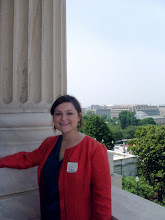
My photo
Hello, Ciao,안녕하세요, Hallo, Hola, Selamat tengahari! My name is Rachael and I am a travel enthusiast. Ever since I can remember, my parents have taken my brother, sister and I on good ol' American road trips. It's safe to say that was where my interest in new places, people and experiences was ignited. As my parents always encouraged my siblings and I to explore and ask questions, I developed a sincere curiosity for new adventures. In addition to seeing much of the United States with my favorite travel companions (my family), I had the opportunity to spend a semester in Rome, Italy, as well as a semester in Seoul, South Korea during my college career. Now, I am honored to be taking part in a Fulbright ETA Scholarship to Malaysia for a year! My family's favorite motto is "Life is all about the journey, not the destination." I invite you to join along in my journey of cultural exchange and mutual understanding in Malaysia! After all, the more, the merrier.

Friday, January 4, 2013

The Biggest Light I've Ever Seen


My family and I with the KHAS students and teachers during their visit to SMK PNZ!
Back when I first arrived in Besut, Malaysia, I was given a tour of my school. As we walked through the exposed hallways, children waved, shouted and pointed. They were obviously shocked to see a foreigner walking through their hallways. All in all, I suppose it was quite different than I expected and in my head I started thinking, “I wonder how this is going to go…” No matter, I remained positive.

As we concluded our tour, we walked past three classrooms with bright, colorful bulletin boards that said, “KHAS.” The welcoming bulletin boards and cute decorations caught my attention. 

KHAS Standout 16- year old Students!
“Apa ini?” (“What is that?”)  I asked my mentor, Halilah.
“This is KHAS class,” she replied.
“Apa ini?” I asked again unsure of what KHAS meant.
“This is for special students. Students with disabilities,” she answered.

“Oh!” I said surprised that a school in my village would even have such a program. In certain parts of Asia, special education programs are still a new concept. In fact, in many Asian countries, they do not even exist.

Halilah went on to explain that only certain
One of my 17-year old students. His smile and
pure curiosity always put a smile on my face!
schools in Malaysia have special education
programs, and I was astounded to realize that my assigned school was one of these.

“Can we go in?” I asked Halilah. She seemed surprised, but led me in.

As we walked in, the students smiled and some waved. The KHAS teachers immediately came up and greeted me with warm embraces and smiles. Only one of the teachers, Jamaliah, in KHAS could speak some English, so she went on to explain their classes to me.

After a 45 minute tour and interacting with the teachers, I looked at the 15 plus students. Perhaps it was their curious demeanor or their kind eyes that captured my heart, but I immediately asked, “Can I work with your students? I could come once a week and do songs with actions or color. I could just help in your classes."

KHAS male students receiving an award for their
accomplishments during the school year.
Photo: Courtesy of SMK PNZ

Students doing a drama!

They looked at me, once again surprised. “But, Miss Rachael they know no English,” they explained.

“I’ll make it work,” I exclaimed.

From that moment on, I went to the KHAS class for forty-minutes, once a week to do songs with them. Although I did converse a bit in Malay with them to build a connection, we did the songs in English. We did the Hokey Pokey, Head Shoulders Knees and Toes, This Little Light of Mine, I’m a Little Tea Pot and Itsy Bitsy Spider.

A few teachers and I before the performance at Teacher's
Day! 
KHAS students doing a song performance!

With relentless repitition over weeks and months, the students were able to catch onto the words and the corresponding actions. Even better, the six KHAS teachers were so eager to help me and participate. We became something of a big team. Together we helped students do the actions and form the words with enthusiasm and energy. The KHAS teachers even helped me teach the students high fives for girls and air fives for boys, as well as how to say, "Hello. How are you?" in English and "See you later!" 

The students practicing for their skit!


Hands down, Hokey Pokey was the students' favorite song. Beyond just the songs, I built such a strong relationship with the KHAS students and the teachers. Even when I did not have class, I would go to the KHAS classrooms to have tea, converse and hang out with the teachers, who became dear friends.When my family came to visit, the KHAS group through somewhat of a little party for them and my family even did the Hokey Pokey with the students. When my friend Frannie came, she met and sang with the students too! In May, I even participated in the KHAS class's drama skit for the annual Teachers' Day held nationwide in Malaysia. 

The students loved stickers! Whenever
my lovely family members would send
stickers from America, the students
 would become so excited!

Honestly, I was never able to have even a partial verbal conversation with any of the KHAS students, but through singing, moving, laughing, coloring, sharing stickers from America and playing, I built a friendship with each of those students. By June, when I would see them in the hall, the girls would give me huge hugs and the boys would give me the legendary “air five” that I taught them. As for the KHAS teachers, I enjoyed several lunches with them every week and that little corner of the school on the first floor became “my place.” It was a place where I felt comfortable and moved each and every day. This set of three little yet vibrant classrooms of so small in the comparison to the world, but yet they shine one of the biggest lights I have ever seen.

Thinking back to my last day at school when I went to KHAS to say “Jumpa lagi (meet again),” it brings tears to my eyes. As I said farewell, I was not even sure if they understood that I was not returning for the next school year. Those students’ smiles, giggles and laughter bring sheer, pure happiness to my heart. In fact, whenever I hear Hokey Pokey, I will surely be thinking of them!

The KHAS teachers and my family. The KHAS community showed my family
quite a welcoming embrace!

Lights! Camera! Action!


In late September, I was notified that my school was chosen to be featured in a documentary entitled, “ETA Success Story.” The documentary was to be aired on television, as well as printed on DVDs in order for the people of Malaysia, the U.S. Embassy, expatriates as well as future ETAs to learn more about the purpose of the Fulbright ETA program in Malaysia.

I was thrilled that my school was chosen to be the “star” of the documentary. With my consent to do the video, officials as well as a film crew came to my school to storyboard. I could not believe the amount of background work that went into filming a short documentary. We sat in a drafting room choosing what topics of school and ETA life we wanted to feature, and we also tried to plan film shooting times and schedules. With the school year quickly coming to a close, we had a great deal of work to do in a short amount of time!

When mid-October approached, the word of film crews being at school spread and students were ecstatic. I explained to the students that because they accomplished so much this year, we were chosen to share our story in a documentary! Some students became very shy, while others said, “Can I speak on the video?” To which I enthusiastically replied, “We will see!”

Malaysian officials, as well as the film crew became a daily appearance at school, and my students were thrilled to be recognized for their hard work. It was as if they could not believe their school, one of thousands, was selected. Sensing the pride and happiness of students, I beamed with excitement. The crews came to my classes and my extracurricular activities, and they followed me around to try to capture a “Day in the Life” of an ETA. Moreover, they took the time to interview my students and hear their stories about life with an ETA.

Pieces of the documentary were obviously staged, while other pieces were unrehearsed nor planned. Although I have not seen the finished product yet, it is scheduled to finish production very soon! I am anxious to see the faces of my students in the video, as well as relive some moments of pure enthusiasm experienced while working with my unique students. My favorite part of the entire experience was proving to the students that hard work does pay off. From a rocky beginning with my students, we were able to build camaraderie in and out of class, create transformation and ultimately be selected as the “ETA Success Story.” 

Wednesday, December 19, 2012

The First Annual SMK PNZ English Magazine


The First Annual English Magazine Club and I posing for a group picture! 

        I have always enjoyed writing and I know it is a strong avenue for expressing ideas and thoughts. Before I embarked on my Fulbright stint, I knew I wanted to introduce a project to my students at my school that would engage the entire community. Thus, the SMK Permaisuri Nur Zahirah Magazine Club was established. The Club had thirteen enthusiastic members and our goal was to produce an English Magazine. It was a long and lengthy process that took a great deal of persistence. Creating a magazine is difficult enough, yet alone creating one that is a the club members' foreign language.


The flowchart we created during our first meeting.
We drafted our ideas.
I broke it into simple steps so as not to make it overwhelming or baffling for my students. During the first meeting, the students and I decided what themes we would feature in the magazine and throughout the rest of the school year, we met to edit work, organize the format and discuss logistics. Initially, the meetings were tough as students were shy to contribute ideas and speak in English. However, I knew that if these students were brave enough to even show up, they must have cared enough to try. So, every week from April to October we met, we chatted, we worked and we used creative energy to produce the school and community’s first English Magazine. As the months passed by, the students became more and more eager to contribute ideas and use English.

I took the students into their own community to challenge them to think of the stories within their own small, yet unique community. Together we interviewed tourists heading out to the famous Perhentian Islands and we spoke to restaurant owners, shop owners, teachers to develop stories about issues and establishments in Besut. We became a presence in the community and people were excited to share the stories about their lives, backgrounds and traditions. Students were surprised to discover that if they kept their eyes and hearts open there were many stories to be unveiled within one’s everyday life.

The English Magazine Club interviews my family
for an article in the magazine. Obviously, we had some
curious guest students attend as well.
Although the magazine was organized and developed by the club of thirteen students, the entire school became engaged through an art contest and literary contest we hosted. Over thirty students submitted work (in English), as well as artwork. To add, after several months, the teachers and administration became very interested in the project. Finally, in the classroom, I was better able to engage students by assigning them and helping them produce articles for the magazine. The students were hesitant at first but soon became eager to write their best in order for their articles to be featured in the first annual magazine.


The completed and printed magazine. The
 cover was completely designed and painted by a
student, as well as the body of the magazine.


By August, the English Magazine Club compiled, wrote and collected well over sixty articles, as well as artwork to be featured as the cover and title page. In addition, there were an array of photos and interviews to be included. After some long school days and a couple sleepless nights, the magazine was edited, finished and sent to print.

In October, the English Magazine Club and I presented the First Annual English Magazine to the school, as well as the community. Moreover, the magazine was presented to the U.S. Embassy, the Malaysian Ministry of Education as well as the Prime Minister’s Office. While turning the pages, students, teachers and community members were excited to see articles and pictures representing their country, their state, their community and their culture.

Similar to the “What Makes Malaysia Special” project (featured in my December 6th post), by allowing individuals to use English as a second language to express their own thoughts, ideas and backgrounds, it makes the language more personal. Through the magazine, I witnessed as my students came to understand the potential of English language as a tool. They discovered that English is
a powerful tool to connect their stories to the rest of the world.

The Chief Minister of Malaysia, the Director and members of the
Malaysian Ministry of Education and U.S. Embassy officials
at a dinner at U.S. Ambassador Jones home. On behalf of my school,
I presented copies of the magazine to them.
Although the magazine is not filtering around globally (yet), it went into the hands and offices of delegates, lawmakers, and expatriates around Malaysia. To add, the magazine was read by community members as well as foreigners. From their own little part of the world in Besut, they were able to share their own stories with many different places and people.

After all, Frank Smith once said, “Two languages open every door along the way.”

Enthusiastic English Magazine Club members before we unveiled the
magazine to the school and community.
Even more, the most powerful 
moment of the entire experience 
was witnessing students realize the importance of their own voice and opinions. They realized just how much they had to share with the world. That in itself, was already beginning to open up new doors that they never imagined.

Thursday, December 6, 2012

A New Avenue


Helping students outline ideas for their essay.
(Photo courtesy of SMK PNZ)
“What makes Malaysia special?” I asked my 4 Science class in late June 2012.

As the students pondered the somewhat vague question, our special VIP sat in a small, wooden chair in the back of the classroom. Mr. Scott Rauland from the U.S. Embassy in Kuala Lumpur came to visit our school and meet the teachers and students of SMK Permaisuri Nur Zahirah. The students were even more nervous than usual, due to this “stranger's” presence in class, but I watched thoughtfully as they reflected upon the seemingly weird question. After what felt like a lengthy minute or two of awkward silence,  students slowly and hesitantly started to respond.

A meeting with Mr. Scott Rauland, from the U.S. Embassy,
and the Terengganu State Education Department
officials before Mr. Rauland came to visit my class.
(Photo courtesy of SMK PNZ)
"Beautiful islands?" a girl hesitantly and softly exclaimed in the front row.

"Perfect," I replied as I wrote it on the board. 

After a few more students nervously and unconfidently responded, other students began to understand and enthusiastically started to participated.

“Many cultures!” shouted a young girl from the back.

Assisting students with the "final touches" for their
poster featuring "Why Sports Make Malaysia Special."
(Photo courtesy of SMK PNZ)
“Excellent!” I responded.
“Hari raya!” an energetic boy said.
“Food!” another stated.
“Baju kurungs!”

For 80 minutes on that hot, June day, with our special visitor, I facilitated a conversation about Malaysia, led by the students using English. As students shared their thoughts, I carefully drew a venn diagram on the board, in order for students to visually understand what I was getting at.

The biggest circle in the middle of the diagram said, “Malaysia,” and the circles branching off of the center said things such as “food,” “holidays,” “cultures” and so many more. Upon each circle, we continued to expand on each idea.

For instance, I posed the questions of “What kind of foods?” or “What different 
cultures are there in Malaysia?” 

Students soon became so interested in the conversation. Although the dialogue was in English, the students were eager to participate because the subject content related to each of their own identities. It was as though this foreign English language was becoming less and less foreign, as they discussed in regards to their own cultural context.

Helping students with captions for
their poster. (Photo courtesy of SMK PNZ)
Up to this point, I was having difficulty capturing the interest of students when it came to English. I tried games, jokes and several different avenues. However, with the exception of about five students, I could not generate participation. Furthermore, I could not eliminate the shy and nervous culture that is typical in an English classroom in Malaysia. To add, although this particular class was my strongest one, I felt that no matter what I tried, I continued to run into a brick wall. Therefore, I was initially quite nervous when I was informed that Mr. Rauland would be coming to visit and that he would be sitting in on my class to gain a better idea about what role a Fulbright ETA plays in the classroom.

Students from Class 4 Science presenting
 "What Makes Malaysia Special."
The week before his visit, I frantically read through ESL books, searched through Google and reached out to fellow ETAs to get ideas for a lesson plan that could be partially successful. After searching, thinking and devising a plan, I could not find anything that I felt would be a hit to my students. Therefore, I reflected back to the times I  felt most at ease speaking beautiful Italian as a second language. What I remembered was that I enjoyed speaking Italian the most when I was talking about my own background and family. Consequently, the idea occurred to me that my students in some way could “educate” me, their teacher, as well as Mr. Rauland about their own background.


Two students from Class 4A1 presenting "Why Fruits
Make Malaysia Special."
(Photo courtesy of SMK PNZ)


Hence, the “What Makes Malaysia Special” project ensued, and it was just what my students needed, in order to use English and share their own story. By relating English to their own culture, it made the foreign language come alive for them.

Poster by a student group who presented "Why Weather
Makes Malaysia Special.

Students working on their posters!


The conversation in class with Mr. Scott Rauland on that hot, June afternoon was only the beginning of a six-week long project, and two   other classes joined in on the project as well.

Throughout the end of June and during July, the students worked in groups to represent the topic of Malaysia that they felt was most special. First, the groups wrote English essays, beginning with an outline and rough draft and ultimately creating a final, well done essay. Second, students created a poster board filled with pictures representing their topic. Finally, students developed presentations that they presented in early August when our next VIP, my dear friend Frannie, came to visit. Moreover, all of the posters were showcased on a "What Makes Malaysia Special" board that I created for the school. During the remainder of the year, teachers and fellow students enjoyed the colorful board and were impressed how students used English to showcase
and share their own country and culture.
Poster by a student group that presented "Why
Different Cultures Make Malaysia Special."


From start to finish, the project was a wonderful learning experience, not only for my students, but for myself. As my students utilized and developed their English ability, I learned more about Malaysia and my students' culture. Also, not to mention, I experienced the immense importance of relentlessly working towards finding new and different avenues for students, in order to make a subject come ALIVE.


With some creativity, reflection and effort, new avenues in the classroom can culminate a newfound energy and enthusiasm. My class’s new avenue led us on a memorable and fun, yet informative, six-week journey as a classroom that allowed us to dive deeper into
Malaysia while using English!

The "What Makes Malaysia Special" board showcased at the
school.

VIP, my dear friend Frannie, with Class 4SC after they made their
presentations!
4 Science students and I with our special VIP,
Frannie who came to visit me in August and
watched student presentations!

Boom Chicka Boom! : English Adventure Camp


My SMK PNZ students at English Adventure Camp!

One of our responsibilities as a Fulbright English Teaching Assistant is to host camps for students, in order to encourage English speaking outside of the classroom. English Adventure Camp is perhaps one of my fondest memories from teaching this year.

From September 2-3, 2012, my roommate, Christina, and I hosted an English Adventure Camp for students from both of our schools. Because of the excitement and enthusiasm my students have acquired for the English language throughout this year, I had over 85 students apply. However, unfortunately, I only had 39 spots! 

On the morning of September 2nd, the students showed up ready for two-days of fun, games and English at Seri Keluang, a resort located down the road from my school on the South China Sea. The students were excited to be spending the night at a camp with their friends! Moreover, our students, as well as Christina and I, were excited to have fellow ETAs Miss Julie, Sir Jordan, Sir Nick and Sir Michael come and help facilitate our camp.

Christina and I decided to make the camp a competition between our schools. Therefore, each school was split into three teams. The teams from each respective school had to work together to earn points for their school. By having teams compete for their schools, it boosted school spirit and increased the competitive atmosphere. It was a blast!

My female campers from Forms 1, 2 and 4! 
The first day consisted of team-building and English stations. Teams went from station to station to compete against the other school for points. During the afternoon break, we started a football (soccer) game. Although I was the only female on the parking lot field, it was probably one of my favorite soccer games of all time. Plus, it was neat to show the boys that girls can play football too! For our evening activities, we taught the students bonfire songs (such as one called, “Boom Chicka Boom”), ate barbeque and then had an open mic night. Several of our students sang songs and played guitar. The students even got Christina and I to sing "What Makes you Beautiful" by One Direction! Finally, on the final day of camp students participated in an English obstacle course. The obstacle course involved physical endeavors, as well as English challenges. Students had to perform a physical challenge, such as frog hops, the crab or wheelbarrow followed by an English challenge, such as a word scramble or tongue twister! Best of all, SMK PNZ (my school) was the obstacle course winner! 

My Class 4A1 boys playing guitar and singing!

My male students holding up their "Human Bingo" sheets. Human Bingo
consisted of boxes with different information, such as "likes chicken" or
"likes Justin Bieber" or "has younger siblings." Students then had to socialize
and meet new students to find a fellow camper that met the criteria in the box. 
A "Human Bingo" sheet.

My school, SMK PNZ, did not end up winning the overall gold for the camp, but they had a great time and I was immensely proud of each of the participants. At the closing ceremony for the camp, I presented several students with individual awards recognizing students with enthusiasm, leadership, improvement and school spirit. The camp was an excellent way for my students to practice English, while having fun and meeting new people.

It is amazing how interested students become when educators make the subject at hand real and allow it to be a fun, hands-on experience. The participants returned to school with even more passion for English, which has made the energy in the classroom contagious.

Since the camp, everywhere I go, I hear my students singing the lyrics to bonfire songs, such as “I said a boom chicka boom!” 

Southtown Article #4: Pen Pal Power

http://southtownstar.suntimes.com/opinions/15065688-474/pen-pal-power-opens-new-worlds-to-students.html

Friday, October 5, 2012

Leader to Leader English Camp


Christina and I with some of my students at
Leader to Leader English Camp

During my term as student body president, the Student Services Commissioner, Laura Glaub SMC 12’, initiated a campus wide event called Love Your Body Week. Love Your Body Week focused on self-esteem, self-love and well being. Moreover, it strived to bring awareness to the community about issues affecting both adolescents and adults alike. All in all, the experience was incredibly empowering and successful. The campus tremendously enjoyed the fulfilling week of events. Laura’s idea did not stop there, as the event was hosted again this year for the Saint Mary’s campus, as well as The University of Notre Dame. In addition, the program earned national recognition. To learn more about Saint Mary’s College Love Your Body Week:


Similarly, since I was a young girl, I have been encouraged to take on leadership roles inside and outside of academic settings. Furthermore, I have always had a community to support me with new challenges and opportunities. Due to this positive atmosphere, whether in my little league soccer team, youth group, high school student council, college student government and now as a Fulbrighter, I have always felt inspired to take on leadership roles and test my limits.

My experiences have allowed me to recognize that leadership is nurtured and facilitated from a positive atmosphere, a support group and through generating self-esteem, self-love and well-being.  The opportunities I have had and the people who have impacted my life still hold and will always hold a special place in my heart.

As my blog title suggests, “Take it With You When You Go,” I brought these experiences here to Malaysia with me. These experiences motivated me to set a goal for my Fulbright experience, “host a girls’ leadership camp," in order to pass on what I have acquired, learned and experienced. Consequently, since the first day I arrived at my school, I knew I wanted to make a girls’ leadership camp a reality.


From September 5, 2012 to September 8, 2012, I hosted SMK Permaisuri Nur Zahirah’s First Annual Leader to Leader Camp in Penang, Malaysia for 34, 14 to 16 year old girls. In May, I started drafting proposals and planning, and with the suggestions of my mentors, we decided to host the camp in Penang. Penang is a historical, British city  located within an island in the northwest corner of Malaysia. 

Ready for the eight-hour bus ride to Penang sporting their camp t-shirt!
Despite the eight- hour bus ride from Besut for the students, the road trip across the country made it even more rewarding of an experience. Although Penang is in Malaysia, it is home to customs and culture that are quite different than Besut. Therefore, some of my students faced culture shock, which added tremendously to this leadership experience. For example, the strong Chinese presence in Penang means that people dress different than in predominantly Islamic Besut. In addition, are many dogs in Penang, while dogs are practically non-existant Besut for religious reasons. Finally, Penang is a busy city, which is quite different from the more rural, fishing community found in Besut.
The students on Penang Hill!

The two-day, three-night camp, consisted of many activities focusing on English and leadership. Each student was given a journal to fill out throughout the course of the camp. The journal consisted of reflective questions to challenge them to think deeply and independently while using English. What are the qualities of a good leader? Who is your hero? What are ten things you want to do in your life?


A student trying to think of what to write for the
"I Love Me" activity


Students working on their "I Love Me" project at the
Penang Botanical Gardens.
The questions were challenging for the young female students, but it was amazing to witness the power of thinking. As students thought deeply about questions, I realized many of them were never asked these questions before. Along with the journal, we played charades and other fun English games. Furthermore, we conducted a “I Love Me” session in which students had a friend trace their body on a big piece of white paper. Then, students had to draw arrows to perspective body parts and answer complementing questions. For example, on the right side of their head they had to write something they were
good at, and on the other side, they wrote something they wanted to be good at. For their mouth, they had to write down something they loved to eat.

For our wrap-up activity, every student got a little, rectangular sheet of paper. On the paper, every student wrote a word that represented what they loved about themselves. The word could not be anything to do with looks, rather something deeper. After every student decided on their word, we all formed an inclusive circle. Every student had to smile proudly and step forward. Each student had to say “Hello, my name is __________ and I love that I_____________.” For example, one girl from my 4A1 class said, "Hello, my name is Mimi and I love that I am so happy!"

Two students from Class 2A proudly showing what they love about themselves, patience and pride.
Students from Class 4A2 proudly showing what they love about themselves!
Of course, it is easier said than done. Surprisingly it is not easy to share with the world or even your friends, what you love about yourself. More often, it is easier to critique yourself. However, by being proud of themselves, they allowed their light to shine. What started off as being a somewhat awkward activity, had every student sincerely beaming by the end. After, each young woman traced their hand on a big, communal piece of paper to represent that they loved themselves and that they promised to support other young women as well as their friends.

Students tracing their hands on our camp poster! 
Sight seeing, activities and relaxation were a few of the many highlights of the SMK PNZ Leadership Camp. The students, as well as myself and fellow teachers, had a memorable time. Looking back, the camp did not consist of many words, as there were no lectures or speeches, and that is because it did not need to. Actions speak louder than words, after all. The camp merely opened up my female students to reflective thinking and goal setting. Most importantly, it demonstrated the importance of young women supporting and encouraging one another. Obviously, one weekend cannot produce self-esteem, self-love and well-being. However, I know this camp was a step in the right direction towards leadership and empowerment for these ambitious young women!

I look forward to seeing where these young women lead their lives. 

Students striking a pose for the camera and sporting their cards stating what they love about themselves!