About Me

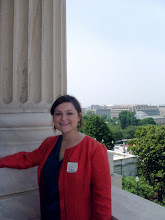
My photo
Hello, Ciao,안녕하세요, Hallo, Hola, Selamat tengahari! My name is Rachael and I am a travel enthusiast. Ever since I can remember, my parents have taken my brother, sister and I on good ol' American road trips. It's safe to say that was where my interest in new places, people and experiences was ignited. As my parents always encouraged my siblings and I to explore and ask questions, I developed a sincere curiosity for new adventures. In addition to seeing much of the United States with my favorite travel companions (my family), I had the opportunity to spend a semester in Rome, Italy, as well as a semester in Seoul, South Korea during my college career. Now, I am honored to be taking part in a Fulbright ETA Scholarship to Malaysia for a year! My family's favorite motto is "Life is all about the journey, not the destination." I invite you to join along in my journey of cultural exchange and mutual understanding in Malaysia! After all, the more, the merrier.

Monday, January 14, 2013

Cikgu Rachael's Top 5 Malaysian Food/Beverage List


After a year of living and eating in Malaysia, what did Cikgu Rachael vote as her top 5 favorites?

#1 Roti Canai
Fellow ETA and friend, Jonathan, and I
indulging in roti canai!

Roti canai is actually a flatbread with Indian influence. It can be found all over Malaysia in stalls, as well as in Besut. My favorite place to get roti canai in Besut was at Nasi Kandar, which was a little restaurant near my house. In general, it is circular and flat, as well as flaky and soft. It is served with curry and dhal, which is a lentil curry. The process to make roti canai is actually quite difficult because the dough needs to be twirled until it is a thin sheet and then folded into a circular shape. When the fellow Terengganu ETAs and I arrived in our respective state for state-level orientation, we found a stall that sold it. Our friend asked if they could teach us to make it, so the man gave us a small hand cloth to practice twirling. It did not work out so well.

This is how roti canai is typically served. 
When the other Fulbrighters and I first arrived in Malaysia, we ate it practically everyday for the first few months. When our baju karungs and pants became a little tighter, some of us (including me) decided to cut back before we gained the ‘Fulbright 15.

Roti tissue drizzled with sugar, milk
and yummy goodness!
There are many different variations of roti canai, such as:
 Roti tissue (my mom and sister’s favorite) – flatbread with sugar and folded upward
Roti pesang – roti with bananas
Roti telur – roti with egg. Many of us tried to see it as an American omelette with some sort of nutritional value.


#2 Teh Tarik

Hot and yummy teh tarok!
Similar to my obsession with roti canai during my first few months in Malaysia, teh tarik became the replacement to my Starbucks Grande non-fat, no whip Mocha that I always had in America. Without any Starbucks or real coffee in Terengganu (they had instant coffee there), I turned to teh tarik. Like roti canai, teh tarik is an Indian influenced hot milk tea beverage. It can be found in virtually any restaurant or outdoor stall in southeastern Asian countries, especially Malaysia, Indonesia and Singapore. Teh tarik literally means “pulled tea” because it is made through a process of “pulling” the drink during preparation. All in all, it involves heavily concentrated black tea, condensed milk and evaporated milk. The lady in my school canteen actually taught me how to make teh tarik, and I look forward to putting my skills to the test here in America in the near future!
           
#3 Sate Ayam

Sate ayam at the local food stall in Jerteh, Terengganu!
Similar to kebabs, sate ayam (chicken satay) are thin pieces of seasoned, grilled chicken put onto little skewers. It was served with incredible peanut sauce, as well as sticky, moist rice cakes. My roommate and I always enjoyed getting sate ayam from a stall in a market in Jerteh, the small city about fifteen minutes from us. In fact, the stall owners became quite familiar with us as well.


#4 Nasi Goreng Ayam


The first nasi goreng I had in Malaysia!
Adjacent is a teh tarik!
The running joke at my school was Cikgu Rachael’s love (perhaps obsession) with nasi goreng ayam. Anyone who was ever with me at some point in Malaysia, knew my love for this dish. Nasi goreng ayam is a white, fried rice mixed with red chilis, peppers, onions, spices, sweet soy sauce, garlic and small chicken pieces. It was served with cucumbers on the side to cut the spiciness, and it could be served with an egg on top as well. My favorite place to get nasi goreng ayam was in my very own SMK PNZ canteen (cafeteria). Every teacher and canteen worker knew that nasi goreng ayam was my go-to dish.


#5 Biscuits Hari Raya

Chocolate biscuits!
Biscuits Hari Raya get their name because they are most commonly found during Ramadan and Hari Raya. In short, there are several variations of these cookies. However, my favorite kind are the circular, mini-sized, crumbly cookies. My favorite flavors are chocolate, as well as the peanut flavor, but the list of flavors and variations goes on and on. My favorite place to buy these were in, once again, my school’s Koperarsi (book shop).


Honorable mention:

Jamaliah with her homemade Kek Lapis!
Kek Lapis Sarawak

Kek Lapis Sarawak is a layered cake commonly served and made in Sarawak, Malaysia on special occasions. These cakes must have at least two colors, and it has a high, firm texture with layers that are held together with jam or a sticky sweet substance. I was only able to try this special cake a few times, but it was delicious. In fact, a fellow teacher from KHAS, Jamaliah, was from Sarawak and made a cake especially for me before I left Malaysia. In addition, when I went to Borneo in July 2012, my friends and I ate our way through Kuching, Sarawak sampling every Kek Lepis that we saw!


Kek Lapis Sarawak!


Food photo gallery:


Nasi goreng ayam!


Nasi goreng ayam. There were
many different variations of this dish!


There are many varieties of Biscuits Hari Raya, as seen in
this photo. The biscuits were given to me by one of my students.

The Terengganu ETA family loved to eat, and we especially loved roti canai!
In fact, we made a whole video entitled "Roti Rolls" to demonstrate our love for it!
This is part of our group at a great roti canai shop in Kuala Terengganu, Malaysia!

Introduction to Malaysian Food: Halal versus Haraam


Seafood at our local 'pasar malam' (night market)
in Besut.

My readers who personally know me, know that I can be a bit of a picky eater. And, I hate to even mention it, but I am not much a seafood person. I will eat it. However, if I were to get a choice between chicken and fish, it would be chicken every time. - A little ironic that I was placed in a fishing village with an economy that is based heavily on the fishing industry.

This man is preparing fresh sugarcane juice. The way foods
are handled and prepared have to be halal for the Muslim
community. 
Halal is a term in Arabic that describes any object or action as permissible to use or engage in. This is based on Islamic law. The opposite of halal is haraam. In terms of food, halal foods are foods that follow Islamic dietary guidelines and are okay to eat. All in all, halal criteria specifies how foods must be prepared and what foods are allowed. For example, alcohol is forbidden under Islamic law, as well as pork products. Therefore, in Besut, it was not possible to find pork, a cold brew or any haraam products. In bigger Malaysian cities, both halal and haraam products could be found, but they were clearly identified and separated. For example, the grocery stores in Kuala Lumpur have the 'halal section' and a separate ‘haraam section.' Needless to say, because pork is my favorite meat, I missed it tremendously during my time in Besut, Malaysia.

Although Besut's markets and stores sold halal products,
it had no impact on my baking! My cookies were halal and
I often brought them to school for my students. This is last
Valentine's Day when I created sugar cookies for my
roommate and I to celebrate this American (and perhaps
Hallmark) holiday.
Overall, it was an eye-opening experience to live within a culture that was aware of dietary restrictions and limitations. Personally, it was not easy for me as I had never lived with dietary restrictions before. And yes, of course, there were times I craved my mom’s pork roast with a Guinness on the side, as well as nights I laid up dreaming of the cracker crust on my mom's breaded pork tenderloin. However, during my time in Besut, in terms of food, I lived halal. I respected their culture and always took it into consideration, whether it was choosing an American candy to bring into the classroom or deciding which foods to use for my English camps. 

Ramadan & Hari Raya Puasa


Female students and I enjoying our
beautiful Hari Raya clothes!
Hari Raya Puasa is an important occasion that is celebrated by Muslims all over the world. The festival marks the end of one month of fasting, known as Ramadan.

Ramadan is a one-month fasting periods in which Muslims fast from sun-up to sun-down. This often can be up to a period of 12 hours. Apart from eating and drinking, Muslims are also forbidden from smoking and having intimate relations. In addition, Muslims are expected to avoid lying, breaking promises and cheating during this time. Ultimately, Ramadan is a time of self-control in which Muslims must concentrate on submitting to their holy one, Allah.


My local Bazaar Ramadan in Besut!
During Ramadan, Bazaar Ramadans are seen throughout Islamic communities. In general, a Bazaar Ramadan is a huge open market with many varieties of food, snacks and gifts. Muslims come to these special markets to purchase foods for the large meals they enjoy after the sunset. (Usually after 7:15pm) During the month, Muslims also purchase and collect food for their large Hari Raya celebrations. (Similar to how my family starts purchasing gifts as well as items for our big Christmas dinner weeks before the dinner
itself). The Bazaar Ramadans were definitely an experience. As I was wandered through the long stretches of my local Bazaar Ramadan in Besut, I was often captivated by the many colorful foods, exotic smells and ambitious shoppers who meandered from stall to stall.


Form 4 girls and I enjoying each other's company at
the Hari Raya celebration.
At the conclusion of Ramadan, Muslims break the fast (puasa) with Hari Raya Puasa. To prepare for Hari Raya Puasa, the women start to sew new curtains as well as new baju karungs and baju melayus. In my teachers’ room at school, there were stacks of beautiful fabrics and complementary pins that were ideal for creating a new garment. On the morning of Hari Raya Puasa, Muslims wear their new clothes and go to the mosque to pray. First, they offer thanks to Allah. Then, they ask for forgiveness from their elders.

Asking forgiveness from elders is essential for the young ones. In fact, I received several “Selamat Hari Raya” (Happy Hari Raya) cards from my students that asked for my forgiveness for their mistakes on homework and behavior in class. The cards I did receive were from my most well behaved students too, ironically. For Hari Raya Puasa, homes are filled with wide varieties of spicy dishes. The Muslim children also receive money.

A Form 2 student offering some of
her homemade cupcakes for Hari Raya!
During Ramadan, there was still school and regular scheduled classes. It was no surprise to me that my students were very lethargic during the beginning of their fasting month. However, it amazed me how well they functioned by the end of Ramadan. Fasting and not drinking any sort of liquid, including water, in a tropical climate is no easy task. I attempted fasting for the first two days of Ramadan, just to see what my students would be experiencing. On day three, I chose to simply not eat or drink while at school during Ramadan, but after school I would be found gorging on food and drinking my weight in water in our home kitchen.

After my school’s week break for Hari Raya, there was a feast to be found in different areas of the school everyday. The different offices at the school hosted potlucks and teachers would go there to enjoy delicious foods on their breaks. Moreover, my school even hosted a school wide Hari Raya celebration. I was instructed to ‘look beautiful’ and wear my best baju karung. When I arrived at school that day, I saw that everyone definitely looked their best. The students did not even have to wear their uniforms! It was a day filled with music, beautiful clothing and food… lots of food!


The school wide Hari Raya celebration!
There was a large variety of foods.

The school wide Hari Raya celebration! About 900 plus
people gathered in the gymnasium and enjoyed a big meal!

My Form 4 students posing for a thumbs up!
A fellow teacher and I!
Some fun Form 4 students sporting their best attire!
A stand-out student of mine, Syatirah, and I! She was one
of the most outgoing sixteen year olds I have ever met!

My fellow teacher and I at the Hari Raya celebration!
KHAS students and I having fun at the celebration!
Teachers and I enjoying food at the school's
Hari Raya celebration. Everyone wore their best garments!
I was allowed to sit in the men's circle for a photo opportunity.

Students performed songs and poems, in Malay, on stage!
Form 4 students and I hiding in the shade
with smiles on our faces!

Ikan bakar (roasted chicken) at the local Bazaar Ramadan!

Roti tempayan (flat, flaky bread) at the local bazaar!

Pandan cake. It was a moist, soft cake special for Hari Raya.
The green color comes from the infamous Pandan leaf in Malaysia.

The melon stall, home to very fresh watermelon! Sedap (delicious!)

My fellow American friends and I enjoying food from the Bazaar Ramadan in Besut!
We became somewhat comfortable eating on my yoga mat and our home's huge carpet!
They came to Besut just to see our bazaar, as it was known as the best one in northern Terengganu!

Saturday, January 12, 2013

Getting Where You Want To Go


The SMK PNZ Choral Speaking team performing their prose entitled
"Getting Where You Want To Go."
Choral speaking consists of a group of 30 to 35 students speaking in unison. In essence, it is a speaking ensemble in which a group often uses various voice combinations and contrasts to bring out the meaning or tone of a passage of poetry or prose. It is a well-known art and activity in Malaysia, and students striving to learn and master English often join their school's choral speaking team. It is highly competitive, and it takes a great deal of dedication, patience and practice.

An English teacher approached me in late February and said, “Cikgu Rachael, so...you coach choral speaking this year?” I looked at him quite confused, which was a common occurrence in the early days of teaching at PNZ.

“Um… what is that?” I asked. He tried to explain in English, but, I must admit, that I was quite uncertain about what it entailed. But, never mind, I responded and said, “Of course I will.”

The Form 5 SMK PNZ performers!
He went onto explain that I needed to compose lyrics for the group and that practice would begin in March. Thus, it was no surprise that I spent that night searching Google like a mad woman trying to figure out what the art of choral speaking entailed and what lyrics needed to consist of. 

Within a few days, I composed four pages of lyrics, successfully titled them and presented them back to the teacher. Several weeks later, we hosted try-outs, chose students and began practicing. Although I was the coach, I was definitely learning as we went along. Choral speaking was immensely new and different to me, so as the students learned new words and  sayings from the lyrics, I was learning the art in itself.

Form 3 performers and I!
My roommate, Nina, and I after the competition.
Nina's school competed as well!
In late April, the competition was held and our school was chosen to perform first! The students were extremely nervous. However, after a group pep talk, they took the stage with their heads held high. As they performed on stage in unison, I beamed. I was so immensely proud of them. It was not long before at our first practice that they had struggled with pronunciation and tone. During the competition, they pronounced the words fluently and spoke with incredible inclination and voice.

The lyrics of the prose I composed were entitled “Getting Where You Want to Go.” All in all, it was about believing in oneself and staying true to one’s dreams. I wrote it as a way to set a positive tone for the remainder of the year! In fact, several of the lines became quite infamous around the school and students used them as inspirational quotes in their classrooms!

I am so proud of you, SMK PNZ Choral Speaking! 

Practice. Practice. Practice.

Dress rehearsal. The girl who is standing on the chair is known as the conductor.

Track and Field - Malaysia Style


Although I started several new projects and clubs at SMK Permaisuri Nur Zahirah, I also became involved with previously existing groups at my school. In March, I helped coach the school track team for their district meet, and in April, I coached the school’s choral speaking group.

In America, track teams train for months on end and compete in multiple meets and tournaments over the course of several months. In contrast, in Malaysia, students train for approximately two months for one, four-day district meet. Then, the track season is over.

When the male track coaches discovered that I was athletic and liked to run, they reached out to me to help coach the team. I was absolutely thrilled. At this point, I had only been at the school for about seven weeks and the students were still intimidated by me. However, at the track meet I simply hung out with the athletes, spoke to them in English and Malay and encouraged them.

Team huddle after the meet! Of
course, it was in Malay, but I
got the gist of it!

Four days on a track, in the heat of the Malaysian sun was tough. In fact, I am pretty sure I sweated out my body weight. However, it was so interesting to compare and contrast track and field in Malaysia versus America. For instance, Malaysia’s high school track teams do not have pole vaulting, but they do have speed walking. I was in awe as I witnessed over thirty students speed walk sixty laps around the track in the heat of the day. In addition, another aspect of Malaysian track and field that caught me by surprise was that many track athletes choose not to wear their shoes. They have them but simply choose to compete without them.

It was a fun few days of running in the sun. Although I finished the week with some rough sunburn and a particularly sweaty wardrobe, it was one heck of a memory. And, the team even presented me with a team polo during awards on the closing day of the meet!

Way to go SMK PNZ!

The SMK PNZ Track and Field team!
We walked away with quite a few medals, and I got an official
team polo!


The girls' relay team!


The athletes hanging out after an event!
Team huddle on the track in the bright sunlight!

Hanging out under our SMK PNZ tent!

Banagrams, stickers and pictures... Oh my!


The daily Banagram group!
My Ultras Redside Chicago Fire
Soccer Team scarf and my old
Chicago Magic soccer jersey!
Litte things proved to be incredibly
useful with my students!
This past year I learned the importance of finding inspiration and wonder in the small things. The three greatest resources that I used with my students this year were Banagrams, stickers and pictures! These three items never failed when it came to entertaining and encouraging my students to speak English.

Practically everyday, I had a group of six Form 1 boys that would come to my desk and curiously look around. I always knew what they were looking for – Banagrams.

“Teacher, where Banagrams?” they would asked.
“Do you want to play?” I would respond.
“Yes!” they shouted in excitement.

Making dominoes with the letter
pieces!
For twenty to forty minutes, the boys would crowd around my small desk and make sentences and words with the little blocks. Little did they know that while they were constructing the pieces into words and sentences, they were learning English. Of course, after several weeks of making words with the pieces, they got a better idea – Banagram dominoes. So, after creating some words, I would let them form a domino chain around my desk. I am not sure if the other teachers appreciated that, but for me, it allowed the students to open up to me. As we played games at my desk, they would magically start talking without hesitation.

A finished Banagram domino sequence!
In addition to Banagrams, stickers and pictures always interested my students. In fact, more than a few times, I received generous care packages from home that contained stickers. I would walk around the school and hand the stickers out to students who would say, “Hello!” to me or “Hi, Teacher!” Of course, word would get around. Before I knew it, students would be running all around the school trying to find me to say something in English and get a sticker. Sticker days were some of my most favorite days!

In class, pictures were incredible resources. Pictures really allowed my students to open up their eyes to my life back home. I would show them pictures of my family and friends, and I even brought in a picture of me with my high school soccer team!

“Teacher, you play football?” many of the students would ask.
“Yes, but in America we call it soccer.” I would explain.
“Oh…” they would comment hesitantly.

My students and I with stickers!
Part of my sticker collection -
thank you to my family and friends!
Whether it was pictures of America, my home, my family or my friends, the pictures allowed them to get to know me. To add, the pictures would bring about many questions, and there was no way for the students to gain answers to their questions without asking me in English!

Through my experience teaching, I have learned the importance of simplicity and creativity when teaching English abroad. Banagrams, pictures and stickers were so simple, yet so useful! 


My Form 4 students with some of my special things: high school soccer photo, Chicago Fire scarf, my Singapore 16K running bib and medal.